The Space Between Not Enough and Too Much
On finding the sweet spot
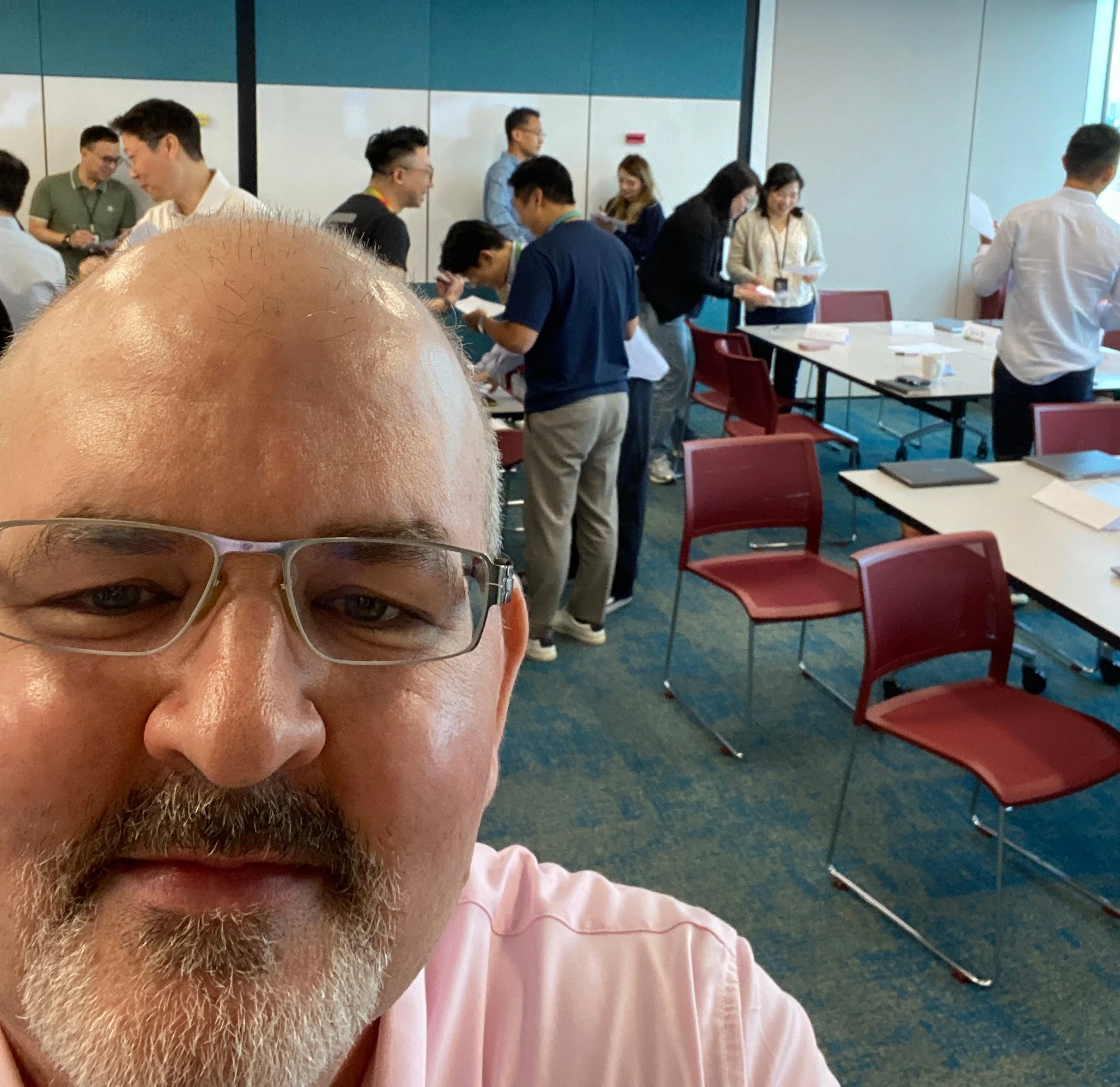
A leadership session in Hong Kong last month. I love to get people up and moving. Maybe one day I’ll channel the great Bruce Lee and lead a cha cha dance.
Dear Friends,
Happy New Year! I appreciate you for subscribing and reading.
We are all familiar with the concept of finding the balance in all things. Salt is a wonderful addition to many dishes, until you use too much and it overwhelms the other flavors in the dish. Laughter in a meeting is wonderful, until it starts to cut into the time needed to discuss and decide important things. The right mix of ebullient and reflective energy is necessary for a training workshop to be useful. Too much of either diminishes the value of a group learning experience.
Goldilocks and the Three Leadership Energies
In a recent coaching session with a senior leader, I shared a summary of feedback I gathered after speaking with seven members of the client’s team1. When it comes to how he involves others in decisions, three of his team members told me he was too inclusive, that he took so much time to listen to others’ opinions that he ended up delaying decisions unnecessarily. Three of them stated that they felt he needed to be more inclusive. One said he had it just right.
As I shared this feedback, a look of consternation began to form on my client’s face. He shook his head and said that when he took over his role four years ago, all he heard was that he needed to be more inclusive in how he made decisions. He’d worked very hard to develop his listening behaviors and made a conscious effort to make sure everyone felt heard before taking an important decision. In light of all of this effort, he found this feedback frustrating. How exactly do we please seven people, each with differing expectations? When do you stop listening and move ahead with a decision?
I understood his frustration. I also pointed out that the 3-3-1 split is evidence that he is probably close to the sweet spot. He realized through our dialogue that with individual communications, he had the opportunity to make adjustments to match personal expectations, and in group situations he could reduce negative perception by checking in with the group: “Has everyone spoken their mind?” and “Are we ready to move on?”
My topic in this post is both nuanced and multi-faceted. I often think about how to help my clients find the right balance in all of their management interactions and efforts. Here is what I’ve learned so far.
Start with Core Principles
Before you can find balance, you need to know what you’re balancing for. Without a clear sense of your core principles, it’s very challenging to find the sweet spot.
What are your principles when it comes to relationships with colleagues? How about when working with someone senior to you? If you are a manager, what are your guiding beliefs? Having a clear sense of your core principles in all of your roles is essential to figuring out when and how to act.
I’ve worked with a number of coaching clients on defining the values that are closest to their hearts, because I know from experience that knowing what’s truly important brings clarity and leads to “right action,” a concept from Buddhist thought that I also love.
For my client looking to balance between being inclusive and decisive, his core principle was "make the best decision for the organization while honoring the people who will implement it." Once he defined that more clearly, it became easier to know when to keep listening and when to decide.
You’re Going to Get it Wrong Sometimes
It’s important to consider the cost of delaying too long on a needed action. As another coaching client put it “Sitting in my office stewing about how I’m going to have a difficult conversation is counterproductive. At some point, you just have to have the conversation and hope for the best.”
I agree with his observation. There is usually enough time for a quick check in with yourself before you take action. How is my physiological and emotional state? What is my intention here? If you’ve got the right energy and your intention is clear, you should decide to trust yourself and take action. What’s the worst that could happen? You might be a little off or create an unintended consequence, in which case you will have a little learning experience.
Nobody gets it right all the time. You’re better off taking action when action is clearly necessary, even if you don’t get it exactly right.
The Truth is in the Results
The best way to know whether you found the sweet spot in the action you took is to examine the results with total honesty.
If you gave a team member constructive feedback and they have avoided talking to you all week, you may have been a tad too harsh. If they smiled at hearing the feedback and then changed nothing, you may have been a tad too soft in your delivery.
If your effort to dissuade your boss from a misguided decision resulted in a stern rebuke, you probably pushed a little too hard.
If your first meeting with a gatekeeper client resulted in a meeting with a decision-maker, you probably hit the right mix of listening and discovering needs and proposing solutions that seem worth exploring further.
If you want to see an example of someone missing the sweet spot, take a look at this short clip of me on stage in May 2025 speaking on “Coaching Leaders to Thrive in Chaos” at the Future of Work Coach Conference in Malaysia. I was about 15% too excited to be there, so I sounded out of breath. If I had been 15% calmer, I would have sounded like I wanted to sound. If I had been 30% calmer, I would have put my audience to sleep.
Make Reflection a Practice
It isn’t enough to be honest about your results. You need a habit of systematically examining the impact of your actions (or non-action). I wrote a chapter on this in Training Zen called “Your Personal Debrief.” Here’s how it works:
After significant interactions, ask yourself:
What did I do well?
What could I have done better?
How well did I honor my principles?
What could I have done more of? Less of?
Write it down in a journal of your choosing. The act of writing clarifies thinking and creates a record you can learn from over time.
At larger milestones—weekly, monthly, quarterly—go deeper with your reflection:
What have I learned recently?
What should I integrate into my work and life going forward?
Where should I focus my development efforts?
Think of yourself as both athlete and concert violinist. Having plenty of opportunities to practice—to lead, parent, teach, create—keeps you in shape. But activity alone won’t necessarily keep your instrument tuned and your playing skills sharp. Regular, honest reflection does that.
If you work with a partner or have trusted colleagues, consider reflecting together. We can’t always see our own blind spots, and others can help us notice patterns we might miss.
Guidance from Chinese Philosophy
I’ve been a semi-professional Sinologist for most of my life2. One of my favorite concepts from Chinese philosophy is the “Golden Mean (中庸).” I believe the Golden Mean is aspirational. It tells us that there is a sweet spot in any action we take. It emphasizes the importance of context in making the right decision about what to do. It suggests we think about what our duty is in a given situation, and strive to act with virtue.
For example, if I am a team leader, I know it is my duty to give my team members feedback, but how do I do this in a way that supports them emotionally and helps them grow? I need to think deeply about both context—who am I talking to and what is their situation?—and bring my most virtuous, well-intentioned self to the task of delivering feedback. Neuroscience tells us that people need 3 to 6 positive, reassuring messages for every negative message or they lose confidence in themselves and trust in the person giving feedback3. It’s worth checking that balance before proceeding.
One of the core tenets of Taoism4 is the “wu-wei (無為),” or “action through inaction.” Picture a mother or a father teaching their child to ride a bicycle. The only way to learn how to balance oneself on a moving bicycle is to try it without training wheels. The thought of their child falling and possibly being hurt spurs many parents to steady the bicycle every time the child seems to be tipping over. Might it not be better to stay close by, ready to cushion a fall if one really does happen, but basically do nothing but watch?
There are many parallels in leadership, coaching, and training. My uncle Duane Black wrote an entire book on the art of hands-off management. Uncle Duane was very successful in his career, in large part because he understood the importance of applying just the right amount of pressure or control for a given management situation. He often acted by not acting himself, focusing instead on enabling his team members to succeed.
The Space of Wisdom
What is wisdom? Personally, I believe much of wisdom is knowing how to locate the space between not enough and too much. It comes from both experience and the honest reflection we are talking about here.
We’ll never get it right all the time. But if we’re conscious of the value of seeking the space of wisdom, do reasonable self-checks, are clear on intentions and principles, and reflect on our actual results, we will find that space more and more often over time.
I’ve got a wildly busy 2026 that starts tomorrow. It’s critical that I remember my own advice, that I invest in the right kinds of actions and apply the right amount of effort. What about you? Where are you seeking better balance? What principles will guide you? And when will you build in time for reflection?
Yours in target practice,
True
P.S. I spent much of the fall working with the production team at Taylor & Francis to copyedit Training Zen, design the cover, and create the index. The estimated release date is March 2026!
As part of the executive coaching process, we usually begin by collecting feedback from people who work directly with the client we are coaching. Normally this is a mix of direct reports, peers, and people senior to the executive being coached. In this particular case, my client wanted me to speak primarily with people reporting to him.
I majored in Chinese at university and do much of my work in Mandarin. I speak and read fluently.
For anyone who likes to geek out like I do, do a search for Dr. Richard Boyatzis’ work on the PEA: NEA balance necessary for effective leader-subordinate relationships.
Laozi is credited with authoring the Tao Te Ching, the core text of Taoism philosophy. I read the original text in an ancient Chinese course at university, and am fond of the Ursula K. Le Guin translation to English. I wrote a LinkedIn post on the application of Taoist thought to leadership here: Laozi on Leadership.
