Three Beliefs that Ruin Workshops
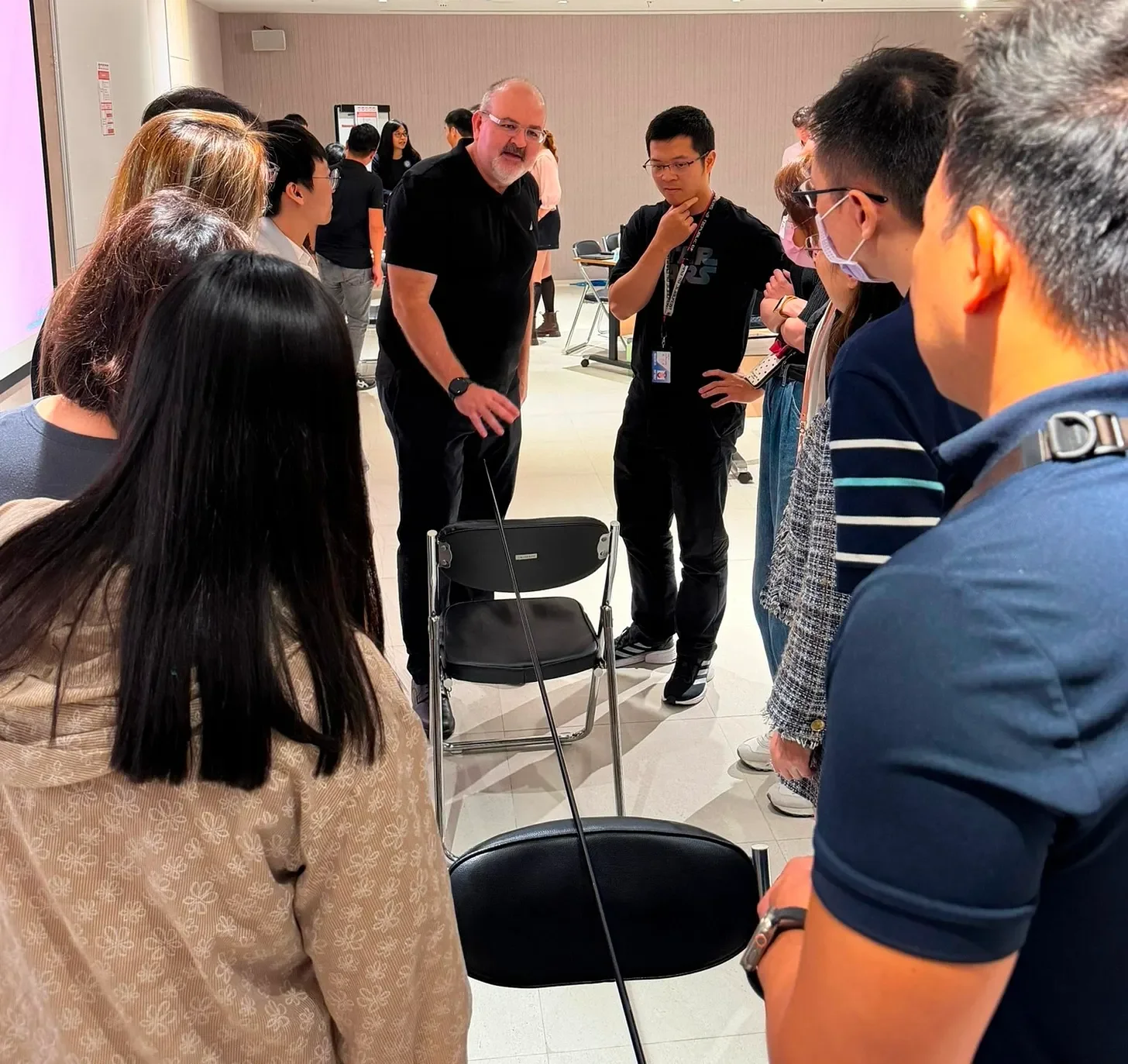
The Giant Trainer in his natural habitat. Engaging people in valuable experiential learning is a core part of the job.
Dear Friends,
Over the 13 years we’ve operated True Development, I’ve interviewed at least 80 or 90 trainers for regional projects we work on or high volume work in Taiwan. When I ask them why they’re drawn to this work, some of the common answers sound perfectly reasonable:
“I like to share my experience.”
“I’m good at it.”
“I like being in front of an audience.”
Here’s the problem: every one of those answers is about the trainer, not the people in the room. And that self-orientation, however innocent, is the root of almost everything that goes wrong in a training workshop.
Let me be blunt. If your primary driver is anything other than a powerful desire to serve the people in front of you, you might be good at this work, but you will never be great at it.
That claim unsettles people, so let me try to explain. There are three beliefs I see again and again among trainers, all of them rooted in self-orientation, and all of them quietly sabotaging results.
Belief #1: “I’m the expert. I have the answers.”
The great irony of building real expertise is that the more you know, the more you have to resist the urge to display it, because the more expertise you display, the more your participants disengage and let you do all the work. They sit back, take notes, nod politely, and leave the session having gained very little.
Your participants know more about their context than you will ever know. Their problems, their team dynamics, their constraints. Your job is to surface their wisdom, not impart yours. The greatest trainers are not in the room to share what they know. They’re there to help others shine.
Belief #2: “My job is to teach them how to do things better.”
It sounds so reasonable. But teaching adults a standardized approach ignores the necessity of individualization and limits the value they get from the workshop.
Here’s what I’ve learned after 21 years of doing this work: when participants ask you “what should I do in this situation?”, roughly 80 to 90 percent of the time they already have an answer in mind. They’re looking for affirmation, not instruction. Rather than trying to sound smart, we should be telling them that what they are planning is right out of the best practices playbook for that situation. We should validate them and shut up. Let them move forward with confidence and do a great job.
The other 10 to 20 percent? Help them think it through. Ask what they have in mind. Coach them toward their own conclusion. That’s almost always more powerful than telling them what they should do.
Your job is not to teach. Your job is to facilitate a process where people have the chance to upgrade their mental models and discover more effective ways of doing their work.
Belief #3: “I’m leading the session, so I should be the focus of attention.”
Many trainers are funny, engaging, and skilled at entertaining a crowd. Their participants have a wonderful time. But when you ask them what they learned, they struggle to name anything concrete.
Making the session about you is the easiest trap to fall into because it feels like success in the moment. The energy is high. People are laughing. You’re getting great feedback on the spot.
But engagement is not the same as learning. The real test is what people do differently on Monday morning. If the answer is “nothing, but the trainer was entertaining,” you’ve failed them.
What replaces these beliefs?
Curiosity. Openness. Genuine respect for your learners and their experience, regardless of their level.
Walk into the room as a process guide, not a content authority, no matter how deep your expertise is. Design activities that challenge people to think beyond their default patterns. Give them space to struggle, reflect, and discover their own breakthroughs and conclusions. Debrief those experiences deeply instead of rushing to the next slide.
Stay in their world, and take the time to understand it. Never try to sell them an idealized world of perfect leadership, optimized motivation, and total mastery that so much training content promises. Their actual world, with all its messiness and constraints. Help them navigate it more effectively, validate their capabilities, and ignite a passion for trying new things and you’ll have done your job as a service-oriented trainer.
This is what Training Zen advocates: a grounded, service-driven approach to creating learning experiences that actually change how people work. It’s the foundation of everything in my book.
I’ll be discussing these and other concepts with JD Schramm on LinkedIn Live today. If you’re able to make it, I’ll be delighted to see you.
If you found this useful, share it with a trainer or facilitator you respect. And if you’re new here, subscribe for regular posts on what it takes to do this work well.
